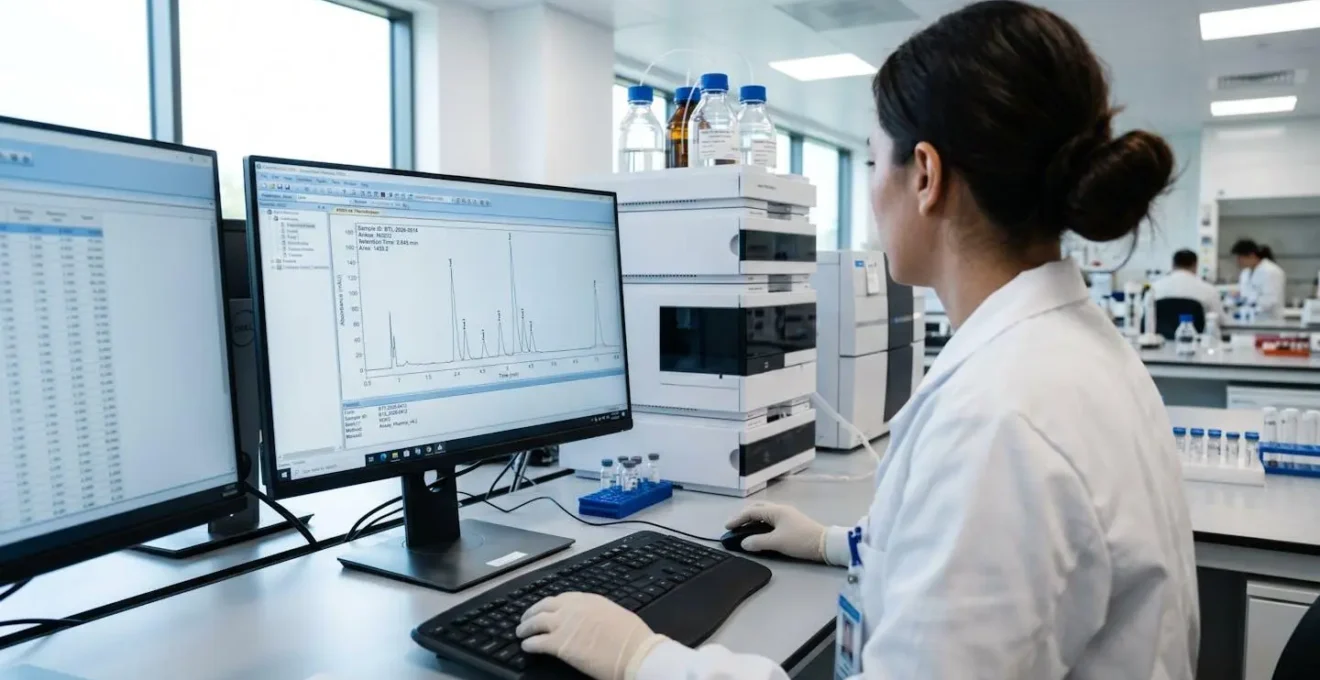
When a pharmaceutical quality control laboratory faces a failed method validation weeks before a critical regulatory submission, the root cause is often traced back to a seemingly minor oversight: inadequate reference standards. For glycan analysis—where structural complexity, isomeric variations, and labile linkages demand exceptional specificity—the choice between certified analytical references and improvised in-house preparations can determine whether a validation programme succeeds or collapses under regulatory scrutiny. According to a 2026 AAPS Journal analysis of 209 FDA-approved BLA submissions, 46% of biologics now include glycan analysis in drug substance release specifications, elevating the stakes for laboratories seeking audit-proof validation documentation.
The choice of reference materials determines whether a glycan analysis method validation succeeds or fails under regulatory scrutiny. When laboratories face inspection findings questioning their analytical standards, the consequences extend beyond documentation—delays of 4-6 months and re-validation costs exceeding £50,000 become the norm. Understanding the regulatory requirements for certified analytical references, their total cost of ownership, and selection criteria transforms validation from compliance checkbox into strategic quality investment.
Reference standard quality contributes to a substantial proportion of bioanalytical method validation failures, yet laboratories continue to underestimate the regulatory scrutiny applied to these foundational materials. The gap between guideline generality and inspection specificity creates compliance risks that can jeopardise entire regulatory submissions, making proactive standard selection a critical early-stage decision in analytical method development.
Your validation priorities before selecting analytical methods:
- Regulatory agencies require documented purity, traceability, and stability data for all reference materials used in method validation
- Industry data indicates that reference standard quality contributes to a substantial proportion of bioanalytical method validation failures
- Complete re-validation due to questioned standards can cause delays of several months and costs reaching tens of thousands of pounds
- Certified analytical references provide regulatory defensibility through comprehensive Certificates of Analysis and audit trails
- Total cost of ownership analysis favours certified standards when re-validation risk is properly accounted
Why Glycan Standards Are Non-Negotiable for Regulatory-Compliant Validation ?
Certified analytical reference materials provide the traceable, structurally characterised benchmarks required to demonstrate method accuracy, precision, and specificity. Without properly documented standards, validation results cannot withstand regulatory inspection scrutiny, creating substantial risk of re-validation requirements and submission delays.
Analytical method validation in pharmaceutical quality control operates within a framework established by international regulatory harmonisation. The ICH Q2(R2) guideline on analytical procedure validation, which entered legal force on 14 June 2024, defines reference materials as encompassing national or international reference standards, pharmacopoeial references, or in-house primary and secondary materials—each required to be « fit for the intended purpose ». The guideline’s validation performance characteristics—specificity, accuracy, precision, range, and detection limits—apply directly to complex molecules including glycoproteins and oligosaccharides.
The structural diversity of glycans creates analytical challenges absent in simpler small molecules. Isomeric oligosaccharides sharing identical molecular formulae can differ only in glycosidic linkage position or anomeric configuration, demanding reference standards with comprehensive structural characterisation beyond basic purity specifications. A laboratory validating an LC-MS method for sialylated glycan profiling requires standards where not only monosaccharide composition but also α2-3 versus α2-6 sialic acid linkages have been confirmed by NMR spectroscopy. Generic carbohydrate references lacking this characterisation depth fail the ICH « fit for purpose » criterion for glycan-specific applications.
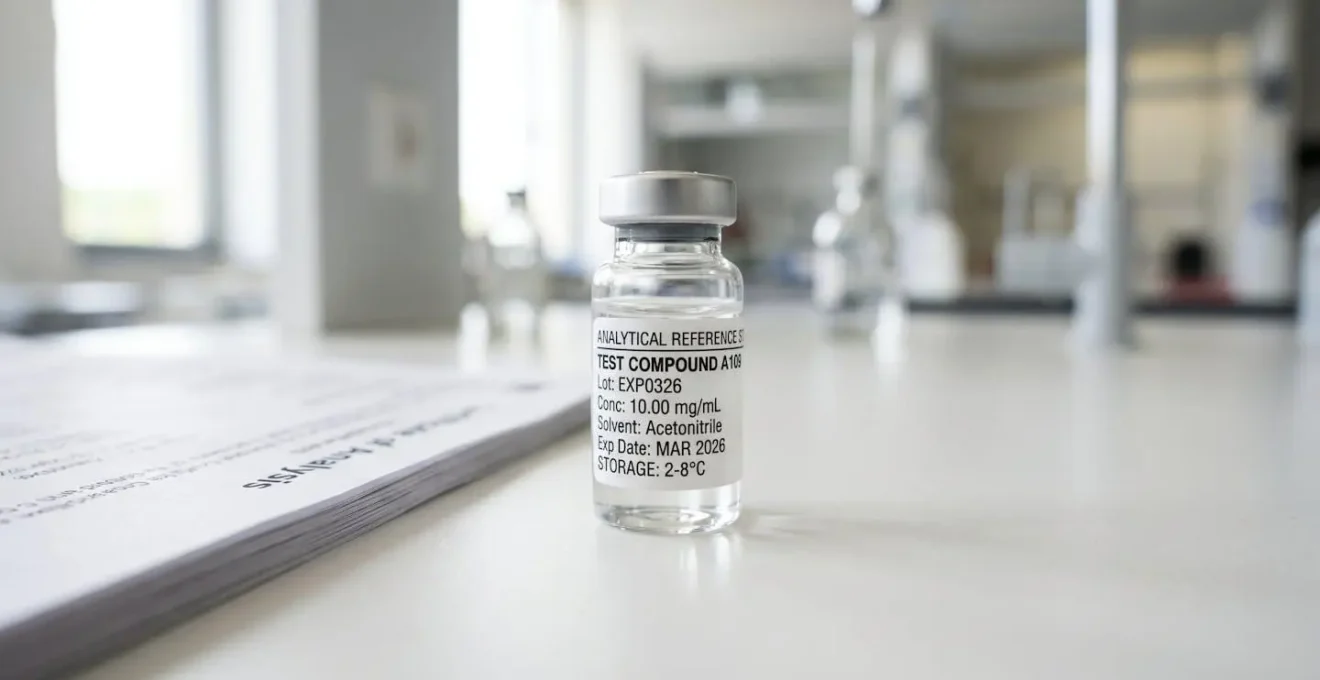
Industry experience demonstrates that validation programmes built on inadequate reference materials encounter predictable failure patterns. Precision studies yield unacceptable relative standard deviations when standard variability exceeds analytical method variability. Accuracy assessments become meaningless when the assigned value of an uncertified reference carries unknown bias. Specificity validation collapses entirely when reference standards contain uncharacterised isomeric impurities that co-elute with target analytes. Laboratories seeking to source certified glycan analytical references can access comprehensive catalogues from specialised suppliers such as elicityl-oligotech.com, which provides human milk oligosaccharides, blood group antigens, and structurally complex globo-series standards with full characterisation documentation.
Critical regulatory risk: Reference materials prepared in-house without comprehensive characterisation—including NMR for structure confirmation, mass spectrometry for molecular weight verification, and chromatographic purity assays—are frequently questioned during regulatory inspections. Inspection findings commonly cite inadequate traceability and stability documentation, triggering validation re-work that can delay product approvals by several months and incur costs in the tens of thousands of pounds.
The regulatory landscape has tightened considerably. The 2025 FDA Guidance on Bioanalytical Method Validation for Biomarkers, published on 21 January 2025, establishes a fit-for-purpose framework requiring validation extent to match the regulatory decision-making context. For methods supporting Biologics License Applications or New Drug Applications, the guidance endorses ICH M10 Bioanalytical Method Validation as the starting standard, directly applicable to chromatographic glycan workflows. The emphasis on fit-for-purpose creates a binary: standards either possess documentation sufficient to support regulatory scrutiny, or they introduce unacceptable validation risk.
What Regulatory Agencies Actually Require (Beyond Generic Guidelines)?
Regulatory guideline language describing reference material requirements appears deceptively broad—terms like « appropriate purity » or « adequately characterised » provide latitude for interpretation. Inspection reality reveals considerably narrower tolerance. Analysis of FDA 483 observations and warning letters shows that reference standard documentation deficiencies rank consistently among the top five findings in bioanalytical method validation audits. The gap between guideline generality and inspection specificity creates a compliance minefield for laboratories assuming that minimal documentation will suffice.
Regulatory inspectors evaluate reference materials across several dimensions simultaneously. Purity specifications must be supported by validated analytical methods, not supplier assertions. Characterisation must employ orthogonal techniques—relying solely on HPLC retention time to confirm glycan identity proves inadequate when multiple isomers exist. Traceability requires documented chains of custody linking working standards back to primary references or internationally recognised materials. Stability data must cover the storage conditions and timeframes actually used in the laboratory, not generic statements from literature. The broader applications of biotechnology in therapeutic development have intensified regulatory scrutiny of analytical methods, particularly for critical quality attributes like glycosylation patterns.
Regulatory context for glycan-specific validation: While ICH Q2(R2) establishes general validation principles applicable across pharmaceutical analysis, glycan methods face heightened scrutiny due to structural complexity and biological significance. Regulatory agencies recognise that glycosylation patterns directly influence therapeutic protein efficacy, safety, and pharmacokinetics—elevating glycan profiling from routine characterisation to critical quality attribute assessment.
The regulatory requirement for « adequate characterisation » translates to specific analytical deliverables for oligosaccharide standards. Nuclear magnetic resonance spectroscopy provides definitive evidence of glycosidic linkage positions and anomeric configurations—data that mass spectrometry alone cannot deliver. High-resolution mass spectrometry confirms molecular formula and detects low-level impurities. Chromatographic profiling by multiple techniques (HPLC, UHPLC, capillary electrophoresis) establishes purity and identifies potential isomeric contaminants. Certificates of Analysis that omit any of these characterisation dimensions invite regulatory questions about whether the standard is truly fit for validating methods intended to distinguish structurally similar glycoforms.
Stability documentation represents another frequent inspection finding. Laboratories often store glycan standards at temperatures or for durations exceeding manufacturer recommendations, then fail to demonstrate that standard integrity has been maintained. Sialic acid-containing oligosaccharides, prone to hydrolysis under improper storage, exemplify the risk. A Certificate of Analysis stating « store at −20°C » followed by laboratory storage at 4°C creates a traceability break that invalidates every analytical result generated using that standard. Regulatory inspectors view such deviations as fundamental quality system failures, not minor documentation oversights.
Certified Analytical References vs In-House Preparations: The Hidden Costs
The apparent cost differential between purchasing certified standards and preparing references in-house creates a tempting but misleading calculation. A certified oligosaccharide analytical reference priced at several hundred pounds appears expensive compared to the nominal material cost of in-house synthesis. This comparison omits the characterisation infrastructure, quality assurance overhead, and regulatory risk exposure that in-house preparation actually entails. Total cost of ownership analysis, incorporating all direct and indirect expenses plus risk-adjusted re-validation probability, reverses the economic calculus decisively.
Consider the characterisation investment required to render an in-house prepared glycan fit for regulatory purposes. NMR spectroscopy for complete structural elucidation requires instrument time, expert interpretation, and often multiple experiments (1D proton, carbon-13, COSY, HSQC, HMBC) costing approximately £2,000-£4,000 per compound based on 2025-2026 UK analytical service provider quotations. High-resolution mass spectrometry for molecular formula confirmation and impurity profiling adds £1,000-£2,000. Chromatographic purity analysis by multiple orthogonal techniques contributes another £800-£1,500. Stability studies under proposed storage conditions, requiring time-point analysis over 3-6 months, add £3,000-£6,000. The total characterisation investment reaches £8,000-£15,000 per compound before accounting for synthesis costs, quality assurance documentation, or laboratory staff time.
Consider the case of a pharmaceutical quality control laboratory validating an LC-MS glycan profiling method three months before a critical BLA submission. Initial validation using in-house prepared oligosaccharide standards yielded acceptable precision (RSD <5% across six replicates) and appeared to meet ICH Q2(R2) criteria. However, during the pre-approval inspection, FDA auditors questioned the absence of NMR spectroscopy data confirming glycosidic linkage positions for the sialylated standards. Unable to provide structural characterisation beyond mass spectrometry molecular weight confirmation, the laboratory faced a binary choice: defend inadequate documentation or repeat validation with certified references. Management chose re-validation. The exercise consumed 4.5 months of laboratory time, £62,000 in direct costs (certified standards, consumables, instrument time, quality assurance documentation), and delayed product launch by two fiscal quarters—translating to approximately £2.4 million in deferred revenue for a high-value biologic. The £680 cost of certified standards that would have prevented this scenario represented 1.1% of the eventual re-validation burden.

| Criterion | Certified Analytical References | Pharmacopoeial Standards | In-House Prepared Materials |
|---|---|---|---|
| Purity Documentation | CoA with purity ≥95%, multi-method characterisation (NMR, MS, HPLC) | Monograph specifications, batch CoA available | Requires complete characterisation investment: NMR, MS, purity assays (£8,000-£15,000 per compound) |
| Regulatory Traceability | Full traceability to primary standards, documented chain of custody | Traceable to pharmacopeial authority, recognised internationally | Requires extensive documentation: synthesis records, characterisation protocols, validation data—significant QA effort |
| Stability Documentation | Stability data included, recommended storage conditions, defined expiry | Stability information in monograph or batch CoA | Requires formal stability study programme (3-6 months minimum, ongoing monitoring) |
| Regulatory Acceptance | Broadly accepted by FDA, EMA, MHRA, other regulatory authorities | Regulatory gold standard where available for specific glycan | Subject to scrutiny and frequent questioning during regulatory inspections |
| Upfront Cost | £200-£800 per standard (complexity dependent) | £150-£500 (where available) | Low direct synthesis cost, but characterisation investment £8,000-£15,000 |
| Total Cost Exposure | Upfront cost only (£200-£800) | Upfront cost only (£150-£500) | Synthesis + characterisation (£8K-£15K) + stability studies + re-validation risk if questioned (£45K-£80K) = potential total £50K-£95K exposure per compound |
| Audit Risk Level | Very low (complete documentation, established traceability) | Very low (pharmacopoeial authority recognised) | Moderate to high (documentation gaps common, traceability frequently questioned) |
Re-validation risk represents the largest hidden cost component. When regulatory inspectors question the adequacy of reference standards during pre-approval inspections, the typical remediation requires complete method re-validation using certified materials. This re-work encompasses repeating all validation parameters (accuracy, precision, specificity, linearity, range, detection limits) with properly characterised standards, re-analysing stability samples if glycan profiling was part of the stability protocol, and potentially re-testing retained batches if comparability must be demonstrated. Industry estimates place complete re-validation costs at£45,000-£80,000 based on 2025-2026 market data when accounting for laboratory resources, consumables, instrument time, and quality assurance documentation. Timeline impact typically spans 4-6 months, potentially delaying regulatory submissions and market entry for high-value therapeutic products.
Advantages of Certified Standards
- Immediate regulatory defensibility with complete Certificate of Analysis
- Established traceability chains eliminating qualification burden
- Stability data and expiry dating provided by supplier
- Predictable total cost without hidden characterisation expenses
Limitations
- Higher upfront unit cost compared to synthesis materials
- Availability constraints for highly specialised or novel glycan structures
- Lead times for procurement from specialised suppliers
The risk-adjusted cost calculation clarifies the economic reality. Assign even a conservative 15-20% probability that in-house prepared standards will be questioned during regulatory review. The expected cost of the re-validation risk alone (£6,750-£16,000) exceeds the purchase price of certified standards by one to two orders of magnitude. Laboratories that economise by preparing glycan references internally often discover, only during regulatory inspection, that they have optimised the wrong variable.
How to Select the Right Glycan Standards for Your Analytical Method?
Method-specific requirements determine appropriate standard specifications. An LC-MS method with limit of quantification below 10 ng/mL demands reference materials of exceptional purity—typically ≥98%—because even minor impurities can generate interfering peaks at the low concentrations being measured. The same method targeting higher concentration ranges (>100 ng/mL) may tolerate slightly lower purity (≥95%) provided that impurity profiles are fully characterised and confirmed non-interfering at the analytical detection wavelength or mass range. Specificity validation for glycan isomers imposes the most stringent requirement: reference standards must possess definitive structural characterisation by NMR confirming glycosidic linkage positions, not merely mass spectrometry data showing correct molecular formula.
Assess Your Analytical Method Requirements
Begin standard selection by defining method performance requirements dictated by the intended use. Methods supporting regulatory submissions require standards meeting full ICH Q2(R2) and FDA bioanalytical guidance criteria—comprehensive characterisation, documented stability, and established traceability. Methods intended for early-stage research or process development can sometimes employ high-quality commercial standards (≥95% purity with basic characterisation) during optimisation phases, provided that a transition to certified references occurs before formal validation begins. Understanding where your method sits in the phases of drug testing—from preclinical characterisation through post-approval quality control—determines the documentation burden your standards must support.
Analytical technique fundamentally influences standard requirements. LC-MS and LC-MS/MS methods, offering high sensitivity and selectivity, require MS-compatible characterisation data demonstrating that reference standards behave predictably under ionisation conditions. HPLC methods using UV or fluorescence detection depend more heavily on chromatographic purity, as co-eluting impurities directly compromise accuracy. Capillary electrophoresis methods for glycan profiling, exploiting charge-to-size ratios to separate isomers, benefit particularly from standards where linkage-specific characterisation has been performed, enabling method specificity validation that distinguishes subtle structural variants.
Evaluate Standard Specifications Against Validation Parameters
Each ICH validation parameter imposes distinct demands on reference standard quality. Accuracy assessment requires standards with assigned values traceable to higher-order references or determined by validated analytical procedures—a circular requirement that necessitates external certification. Precision studies demand batch-to-batch consistency if multiple standard lots will be consumed during validation, requiring suppliers to demonstrate manufacturing reproducibility. Linearity evaluation across the analytical range consumes substantial standard quantities, particularly when multiple concentration levels and replicates are prepared—budget 10-50 mg depending on method sensitivity. Detection and quantitation limit determinations at the low end of the range require exceptionally pure standards, as impurity interference becomes pronounced near baseline noise levels.
Certificate of Analysis evaluation constitutes a critical decision checkpoint. Comprehensive CoAs include: batch-specific purity determination by multiple analytical techniques, complete structural characterisation data (NMR, high-resolution MS), impurity profile identifying and quantifying related substances, stability data under defined storage conditions with recommended expiry, and traceability statement linking the standard to primary references or internationally recognised materials. Certificates omitting any of these elements signal gaps that may surface during regulatory inspection. The most reliable approach for GMP applications involves requiring CoAs that explicitly address every validation parameter the standard will support.
Verify Documentation and Supplier Credentials
Supplier qualification extends beyond standard specifications to encompass quality system infrastructure. Suppliers operating under ISO 9001 quality management certification or equivalent demonstrate systematic approaches to quality control, traceability, and documentation. Regulatory supply experience—evidenced by customer base including pharmaceutical companies conducting successful regulatory submissions—provides confidence that standards have withstood scrutiny in previous inspections. Technical support capability matters particularly for complex glycans, where questions about structural characterisation or analytical method compatibility require scientifically informed responses rather than generic customer service.
Selecting Glycan Standards Based on Your Analytical Application
- For LC-MS or LC-MS/MS methods:
High-sensitivity methods require standards with purity ≥98% and MS-compatible characterisation. If the application is GMP quality control for regulatory submission, select certified analytical references with full CoA, traceability documentation, and stability data. If the application is research or method development, certified references remain preferred for validation, though high-quality commercial standards (≥95%) may suffice for preliminary optimisation work.
- For HPLC with UV or fluorescence detection:
Purity requirements depend on target limit of quantification. Methods with LOQ below 10 ng/mL require high-purity standards (≥98%) to prevent interference peaks affecting accuracy. Methods with LOQ above 100 ng/mL can accept certified standards at ≥95% purity, provided the Certificate of Analysis documents the impurity profile and confirms no interference at the analytical detection wavelength.
- For capillary electrophoresis glycan profiling:
High-resolution separation of glycan isomers requires standards with documented linkage characterisation. Select certified analytical references with NMR confirmation of glycosidic linkage positions and anomeric configurations. Isomer-specific standards are critical for demonstrating method specificity when validating separation of structural variants differing only in linkage position.
- When the required glycan structure is unavailable as a certified standard:
Three options exist: commission custom synthesis and characterisation from specialised suppliers offering glycan synthesis services; prepare in-house with full characterisation investment including NMR, MS, purity analysis, and stability studies (budget £8,000-£15,000 and 3-6 months); or use a structurally similar certified standard for method development, transitioning to the target glycan once availability improves. Custom synthesis from experienced suppliers typically proves most cost-effective for GMP applications requiring regulatory defensibility.
Reference Standard Selection and Qualification Checklist
- Certificate of Analysis includes purity specification meeting method requirements (≥95% minimum, ≥98% for high-sensitivity applications)
- Structural characterisation documented by multiple orthogonal methods: NMR for linkage confirmation, MS for molecular weight, chromatography for purity
- Stability data provided with recommended storage conditions, storage stability duration, and defined expiry date
- Traceability documented: source material identification, synthesis or purification method, quality control procedures
- Supplier possesses quality system certification (ISO 9001 or equivalent) and demonstrates regulatory supply experience
- Adequate quantity available for complete validation protocol plus ongoing system suitability testing and re-testing reserves (typically 10-50 mg depending on method sensitivity)
- Total cost of ownership analysis completed, incorporating re-validation risk if standards are questioned during regulatory review
Your Questions About Glycan Standards in Method Validation
Are certified glycan standards truly necessary or merely recommended best practice?
Certified standards are necessary for regulatory-defensible validation. Whilst regulations do not mandate the specific term « certified », they require documented purity, established traceability, and comprehensive characterisation—attributes that certified standards provide in auditable form. Industry data indicates that reference standard documentation gaps rank consistently among the top findings in regulatory inspections of bioanalytical methods. The practical question is not whether certified standards are technically required, but whether laboratories can afford the re-validation risk and regulatory delay that inadequate standards create.
What purity level is required for different validation parameters?
Minimum purity depends on analytical method sensitivity and the specific validation parameters being assessed. For accuracy and precision validation in LC-MS methods with limit of quantification below 10 ng/mL, standards with purity ≥98% are recommended to minimise impurity interference. Less sensitive methods such as HPLC-UV with LOQ above 100 ng/mL may accept purity ≥95% if impurities are characterised and confirmed non-interfering at the detection wavelength. For specificity validation distinguishing glycan isomers, the critical factor is structural characterisation depth—particularly NMR-confirmed linkage positions—rather than absolute purity percentage.
How can the cost of certified standards be justified to management?
Present a total cost of ownership analysis comparing certified standard cost (typically £300-£800 per compound) against re-validation cost if standards are questioned during regulatory inspection (£45,000-£80,000 plus 4-6 month timeline delay). Calculate the risk-adjusted expected cost: even if re-validation probability is conservatively estimated at 15-20%, the expected cost of inadequate standards (£6,750-£16,000) exceeds certified standard investment by one to two orders of magnitude. Frame the decision as risk mitigation and regulatory audit insurance rather than consumable expenditure, emphasising that certified standards protect the entire validation investment and submission timeline.
What options exist when the specific glycan structure required is unavailable as a certified standard?
Three options are available for glycans lacking commercial certified standards: commission custom synthesis and characterisation from specialised suppliers offering bespoke glycan synthesis services; prepare the reference in-house with full characterisation investment including NMR, MS, purity analysis, and formal stability studies (budget £8,000-£15,000 and allow 3-6 months); or use a structurally similar certified standard for method development and optimisation, then transition to the target glycan once it becomes available or can be custom synthesised. Custom synthesis from suppliers with regulatory supply experience typically proves most cost-effective for GMP applications requiring robust regulatory defensibility.
How long can glycan reference standards be stored and used?
Storage stability varies with glycan structure and storage conditions. Certified standards include expiry dates based on stability data—typically 2-5 years when stored at −20°C with desiccant protection. Sialic acid-containing glycans, being more chemically labile, often carry shorter expiry periods of 1-3 years. Always adhere to storage conditions specified in the Certificate of Analysis, use desiccants to prevent moisture exposure, minimise freeze-thaw cycles, and verify standard integrity periodically through system suitability testing. Never use standards beyond expiry dates for validated GMP methods, as traceability and regulatory defensibility are voided.
Can a single standard support multiple analytical methods or applications?
A single certified glycan standard can indeed support multiple analytical methods (HPLC, LC-MS, capillary electrophoresis) provided that purity and characterisation meet requirements for each method. However, each analytical method requires independent validation, and the standard must satisfy specifications for the most demanding method in the portfolio. Purchase sufficient quantity to cover initial validation for all methods and parameters, ongoing system suitability testing, and re-testing reserves—typically 10-50 mg depending on method sensitivity and anticipated testing frequency over the standard’s shelf life.
The evidence from regulatory guidance, industry data, and total cost analysis converges on a clear conclusion: certified glycan analytical references represent not premium options but foundational requirements for regulatory-compliant method validation. Laboratories initiating validation programmes should prioritise standard acquisition and qualification early in the analytical lifecycle, before substantial method development investment has been committed to approaches that inadequate references will later undermine.
For laboratories currently operating with in-house prepared references or uncertified materials, transitioning to certified standards before regulatory submission remains feasible and economically rational. The re-validation investment required for the transition, whilst non-trivial, proves substantially smaller than the re-validation burden imposed by regulatory inspection findings citing inadequate reference materials. The calculus favours proactive remediation over reactive crisis management.
Essential Principles for Glycan Standard Selection
- Regulatory requirements demand documented purity, comprehensive structural characterisation, and established traceability—attributes that certified standards provide in auditable form
- Total cost of ownership analysis, incorporating re-validation risk, demonstrates that certified standards reduce overall expenditure compared to inadequately characterised alternatives
- Method-specific requirements determine appropriate standard specifications, with high-sensitivity LC-MS methods demanding purity ≥98% and comprehensive MS characterisation
- Certificate of Analysis evaluation should verify batch-specific purity data, multi-technique characterisation (NMR, MS, chromatography), stability documentation, and traceability statements
- Supplier qualification extends beyond standard specifications to quality system certification and demonstrated regulatory supply experience
Regulatory Considerations and Limitations
Scope of guidance: This article provides general information on glycan standards and method validation principles and does not replace consultation with regulatory affairs specialists for application-specific decisions. Regulatory requirements and acceptable validation practices may vary by jurisdiction, therapeutic area, and analytical method. Each analytical method and intended use requires a specific validation protocol approved by qualified persons.
Risk awareness: Potential risks include regulatory audit findings if standards used do not meet traceability and purity requirements for the intended application; method validation failure if reference materials lack adequate characterisation or comprehensive Certificate of Analysis; and costly re-validation if selected standards are questioned during regulatory review processes.
Professional consultation: For validation protocol review and regulatory compliance assessment specific to your analytical application, consult a regulatory affairs specialist, qualified person (QP) with CMC expertise, or accredited analytical laboratory experienced in pharmaceutical method validation.